The JET Programme has increased its salary for 2026—the highest pay in years. But beyond salary, many applicants still have questions about housing, requirements, and what life in Japan is really like.
This guide answers the most searched JET Programme questions and helps you prepare for your move to Japan—from applying to settling in.
Planning ahead makes your move much easier—especially when it comes to setting up essentials like your phone and internet before you arrive.
Quick Facts (2026 Summary)
Here are key details you need to know about the JET Programme in 2026:
- 2026 Deadline: November 14, 2025
- 2027 Expected Deadline: November 2026
- Starting Salary: 4,020,000 JPY/year (~335,000 JPY/month)
- Requirement: Bachelor's degree (by June 26, 2026)
- Arrival Dates: April (early departure) or July-August (main intake)
These core facts give you a quick overview of the program timeline, salary, and requirements—so you can plan ahead with confidence.
Thinking About Applying to JET?

If you're considering the JET Programme, you're not alone. Many applicants start with the same key questions about requirements, acceptance rate, and age limits.
These topics are some of the most searched—and understanding them early can help you decide if JET is the right fit for you.
Q: What are the requirements to join the JET Programme in 2026?
To join the JET Programme in 2026, you must meet these key requirements:
- Bachelor's degree (completed by June 26, 2026; associate degrees not accepted)
- Citizenship from a participating country (e.g., USA, UK, Canada)
- Native-level English proficiency
- Good health and no criminal record
- Dual citizens of Japan must renounce Japanese nationality before departure
You do not need Japanese ability or teaching experience to apply, making JET accessible to many first-time applicants.
Q: What is the JET Programme acceptance rate for 2026?
The JET Programme acceptance rate is about 20-25%, making it competitive but still achievable.
- Applications: ~4,000-5,000 per year
- Positions: ~1,000-1,100 spots
- Interview rate: Around 50% of applicants are invited to interview
- CIR roles: Less than 10% of positions, making them more competitve
While JET is selective, strong preparation can significantly improve your chances—especially at the interview stage.
Q: Is there an age limit for the JET Programme?
There is no official age limit for the JET Programme.
- Official Policy: Anyone can apply, regardless of age
- Program focus: Designed as a cultural exchange, so maturity and adaptability matter most.
- Typical applicants: Most participants are recent graduates, but older applicants are still eligible.
While candidates over 50 are less common, acceptance depends more on your fit, motivation, and ability to adjust to life in Japan—not your age.
Q: Do I need to speak Japanese to join the JET Programme?
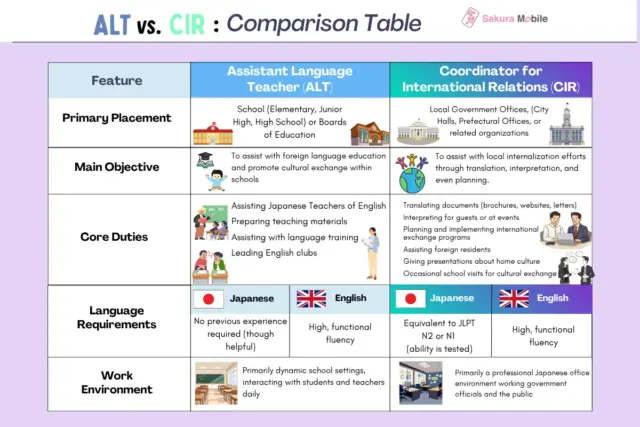
No, Japanese is not required for most JET positions.
- ALTs (Assistant Language Teachers): No Japanese ability required
- CIRs (Coordinators for International Relations): Require advanced Japanese (JLPT N1-N2 level)
In reality, having basic "survival" Japanese (greetings, shopping, simple conversations) will make daily life much easier.
Don't worry if you're a beginner—many JET participants arrive with little to no Japanese and learn on the job.
Preparing Your Move to Japan
After getting accepted into the JET Programme, the next step is understanding the basics of living in Japan—especially your salary and housing.
Knowing this early helps you plan your budget and avoid surprises when you arrive.
Q: How much is the JET Programme salary in 2026?
The JET Programme salary in 2026 starts at 4,020,000 JPY per year (about 335,000 JPY per month) and increases each year:
- 1st Year: 4,020,000 JPY (~335,000 JPY/month)
- 2nd Year: 4,140,000 JPY (~345,000 JPY/month)
- 3rd Year: 4,260,000 JPY (~355,000 JPY/month)
- 4th-5th Year: 4,320,000 JPY (~360,000 JPY/month)
These are pre-tax amounts, so deductions like health insurance, pension, and income tax will be taken monthly.
Real-Life Insight: What This Salary Means
- Cost of living varies by placement
- Rural areas: Lower rent and living costs
- Cities: Higher rent, but more convenience
This means your actual savings can differ a lot depending on where you are placed.
Many JETs find that planning their monthly expenses and setup costs early (phone, internet, housing) makes a big difference in how comfortable their first few months feel.
Q: Does the JET Programme provide housing?
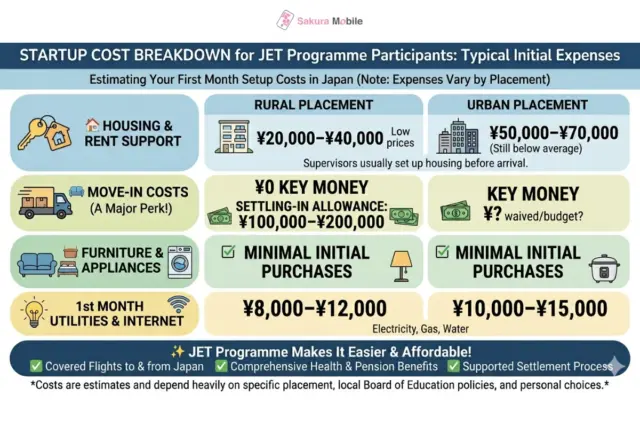
No, the JET Programme does not fully cover housing—you are responsible for your own rent and utilities.
What to Expect
- Your Contracting Organization (CO) usually helps arrange your apartment
- Some placements offer subsidized rent, but this varies
- You will still pay:
- Rent
- Utilities (electricity, gas, water)
Support exists, but costs depend heavily on your placement.
Estimated Startup Costs
Expect 300,000-450,000 JPY ($2,500-$3,000) upfront.
This typically includes:
- Deposit
- Key money (reikin)
- First month's rent
- Basic furniture
Many JET apartments have slow or outdated internet (if any at all), and fiber setup can take weeks to months.
To avoid delays, many JET participants choose Sakura Mobile's Pocket WiFi or Home WiFi for instant internet access.
Why it works:
- Get online immediately
- No complicated contracts
- English support available
- Stay connected from day one
Arrival Survival (The "First Week" Deadlock)
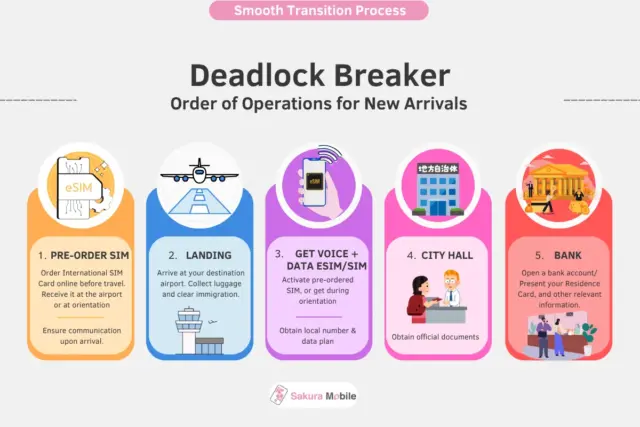
Your first week in Japan may feel overwhelming. You'll be attending orientation, moving to your placement, and setting up essential services—all at the same time.
This is where most new JET participants face the biggest challenges, especially with housing, banking, and internet setup.
The following FAQs will help you understand what to expect and how to prepare so you can settle in smoothly.
Q: What happens during your first week in Japan?
Your first week on the JET Programme is focused on orientation, travel, and setting up your daily life.
- Tokyo Orientation: A mandatory 3-day conference where you receive training and meet other JETs
- Travel to Placement: You'll then travel to your assigned city or town by bus, train, or plane.
- Address Registration: You must register your address at City Hall within 14 days
- Life Setup: This includes opening a bank account, getting a hanko (seal), and setting up your phone and internet.
This week is fast-paced, and many things happen at once—so preparing in advance can make a big difference.

💡 Tip: Having your SIM or WiFi ready before arrival can save time and help you stay connected while handling paperwork and settling in.
Q: How do I get a Japanese SIM or eSIM without a bank account?
Many new arrivals run into a common problem in Japan: major carriers like docomo, au, and SoftBank require a Japanese bank account, but banks also require a Japanese phone number to open an account.
This creates a frustrating "catch-22" during your first week.
The Solution
The easiest way around this is to use a provider that accepts international credit cards and verifies your identity with a passport.
Sakura Mobile is a popular option among JET participants because it lets you get connected without needing a Japanese bank account, and your SIM or eSIM can be ready as soon as you arrive.
Many JET participants set up their SIM before coming to Japan so they can stay connected from day one.
You can even pick up your SIM during Tokyo Orientation at Keio Plaza Hotel, making the process even simpler.
More than 1 in 3 JET participants use Sakura Mobile to avoid delays and start their new life in Japan smoothly.
Q: How do I set up home internet in a rural placement?
Setting up home internet in rural Japan can take time. While fiber internet (Hikari) is the best option for speed and stability, installation can take anywhere from 2 weeks to 3 months.
This means many JET participants arrive with no internet at home for weeks.
What to Expect
Delays are common, especially in rural areas. On top of that, most schools do not allow personal devices on their WiFi, so you can't rely on your workplace for internet access either.
This makes having your own home connection essential from day one.
The Simple Solution
Many JETs use a temporary internet solution while waiting for fiber installation.
- Pocket WiFi: Often used as a free connectivity option while waiting for fiber setup
- Home WiFi (plug-and-play): Start with instant internet at home, then upgrade to fiber later if needed.
Sakura Mobile offers both options, making it easy to stay connected immediately without long wait times or complicated setup.
Stay Connected Without Waiting
Instead of living without internet for weeks, you can set up instant WiFi before or right after arrival. This allows you to stay connected at home and work, prepare lessons and manage daily tasks, and avoid delays and complicated setup.
Long-Term Life in Japan (What Most Guides Don't Tell You)
Once you settle in, life in Japan becomes routine—but new challenges can come up over time.
Most guides focus on getting to Japan, but not what happens after.
In this section, we'll cover the common issues JET participants face long-term.
Q: What are the most common problems for new JETs?
The JET Programme follows the idea of "ESID" (Every Situation is Different)—your experience can vary a lot depending on your placement.
Common Challenges to Expect:
- Financial surprises: Some placements include hidden costs like non-reimbursed transportation or unexpected utility fees.
- Housing issues: Older apartments may have problems like mold or outdated facilities
- Workplace rules: Leave (nenkyuu) can be limited, and some participants experience long periods of "desk-warming."
- Mental health: Homesickness often peaks around the 6-month mark.
Why Staying Connected Matters
One of the biggest factors in adjusting to life in Japan is staying connected with friends and family back home.
A stable connection makes it easier to:
- Have regular video calls
- Stay in touch across time zones
- Manage stress during cultural adjustment
Many JET participants prioritize reliable mobile or home internet early on to make long-term life in Japan more comfortable.
Your JET Programme 2026 Checklist
Use this simple checklist to stay organized and avoid common problems before and after arriving in Japan.
Before You Leave:
- Unlock your phone so it works with a Japanese SIM or eSIM
- Order your SIM or eSIM in advance to stay connected from day one
- Prepare important documents (passport, degree, acceptance papers)
Setting up your SIM before departure helps you avoid delays during your first week.
When You Arrive
- Receive your Residence Card at the airport
- Register your address at City Hall within 14 days
- Activate your SIM or eSIM to get online immediately
Having mobile data ready makes it much easier to navigate, communicate, and complete paperwork.
When You Settle In
- Open a Japanese bank account
- Apply for home internet (fiber) if needed
- Use Pocket WiFi or Home WiFi in the meantime
Sakura Mobile offers free Pocket WiFi to keep you connected while you wait for your fiber internet installation.
Final Tip: Make Your Move to Japan Easier

Moving to Japan with the JET Programme can feel overwhelming—but getting connected doesn't have to be.
Many new arrivals struggle with setting up phone plans, internet, and contracts in a new country. That's why more than 1 in 3 JET participants choose Sakura Mobile to stay connected from day one.
With Sakura Mobile, you get:
- No complicated contracts
- English-language support
- Fast, reliable connection from the moment you arrive
Whether you need a SIM, eSIM, or WiFi, setting this up in advance can make your transition to life in Japan much smoother.