
Moving in Japan sounds easy—until you see the prices. Quotes often feel like a "black box," costs double during peak season, and many companies don't speak English. It's no surprise that many foreigners overpay or choose the wrong services.
This guide helps expats in Japan move smarter. We will break down the top moving companies, show you real 2026 price estimates, and share insider tips to save you money.
By the end, you'll know exactly which mover to pick—and how to avoid mistakes that could leave you without internet in your new home.
- Quick Comparison: Best Moving Companies in Japan (2026)
- How Much Does Moving Cost?
- Top Moving Companies in Japan (2026 Reviews)
- The Ultimate Relocation Checklist (Japan 2026)
- How to Save 20,000 – 100,000+ JPY on Your Move
- Avoid the "Internet Gap" (Setup Your WiFi Now)
- Top 3 Moving Mistakes to Avoid in Japan
- Moving FAQs
Quick Comparison: Best Moving Companies in Japan (2026)
If you need a faster answer, start here. These are the top-rated movers based on price and English support.
| Mover | Best For | English Support | Cost Level | Coverage |
|---|---|---|---|---|
| Best Moving Service | Overall / Budget balance | Full (Web / Staff) | ¥ | Tokyo, Kanagawa, Chiba, Saitama, Osaka, Kyoto, Hyogo, Nara, Fukuoka |
| Tokyo Helping Hands | Small loads | Full (Expat-led) | ¥ | Kanto |
| Yamato Home | Budget / simple moves | Partial (Online) | ¥ – ¥¥ | Nationwide |
| Tokyo Move | Tokyo-based expats | Full (Expat-led) | ¥¥ | Kanto |
| Sakai Moving Center | Families / large moves | Partial to full | ¥¥ | Nationwide |
| PROROW Transport | International / High-value items | Full (Global desk) | ¥¥ – ¥¥¥ | Nationwide |
| Arisan Mark | Premium / delicate items | Partial to none (Depends on driver) | ¥¥¥ | Nationwide |
| Nippon Express | Corporate / Global | Full (Global desk) | ¥¥¥ | Nationwide |
How Much Does Moving Cost?
Moving costs in Japan depend on three things: how much you own, how far you go, and when you move.
Average Moving Costs in Japan 2026
| Household Type | Local Move (Under 50 km) | Long Distance (200 km+) |
|---|---|---|
| Single Person (Few Items) | 30,000 – 62,000 JPY | 60,000 – 120,000 JPY |
| Single Person (Many Items) | 50,000 – 80,000 JPY | 80,000 – 140,000 JPY |
| Two People / Couple | 70,000 – 140,000 JPY | 100,000 – 200,000 JPY |
| Family (3-4 people) | 90,000 – 220,000 JPY | 150,000 – 380,000 JPY |
Peak Season Warning: Why Prices Spike in March–April
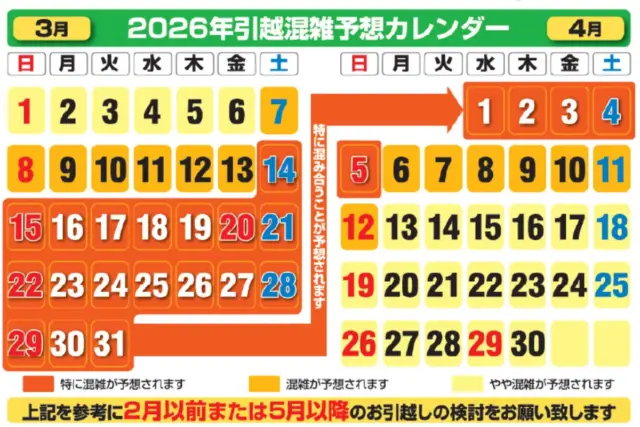
If you are moving in Japan, timing is your biggest cost factor. March and early April are known as "Peak Season" (hikkoshi shiizun). During this window, prices are at their highest.
The 2026 Price Reality:
- Costs Triple: A move that costs 50,000 JPY in October often jumps to 150,000 JPY+ in March + April.
- Sold Out: Top English-speaking movers often sell out 6 weeks in advance.
- No Deals: Companies stop offering discounts because they don't need to.
How to Beat the Rush:
- Move in January or June: These are the cheapest months to move in Japan.
- Choose a Weekday: Mid-week moves are 10,000 – 20,000 JPY cheaper than weekends.
- The 2-Month Rule: For a March move, you must book your mover and your internet by January.

Sakura Quick-Tip: Moving companies aren't the only ones that get busy. Fiber internet installations also spike in March and April, with wait times hitting 6-8 weeks.
Don't wait in the dark. Order a Sakura Mobile Home WiFi unit today. It's plug-and-play, so you'll have instant internet the moment you walk into your new home—even if your fiber isn't ready.
Top Moving Companies in Japan (2026 Reviews)
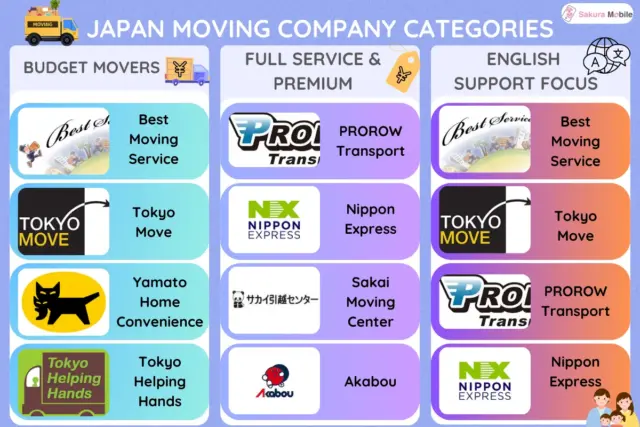
Here are the best moving companies in Japan for 2026, based on price, English support, and real expat needs. Use the labels below to quickly find the best option for your situation.
Best Overall: Best Moving Service
URL: https://www.bestservice.co.jp/en/
- Best for: Expats who want full English support at a reasonable price
- Watch out for: Books out quickly during peak season (March–April)
- Typical price range:
- Single: 35,000 – 55,000 JPY
Family: 85,000 – 180,000 JPY
Why choose them:
The most balanced option—affordable, fully English-friendly, and flexible.
Best for Tokyo Expats: Tokyo Move
URL: https://www.tokyomove.com/
- Best for: Foreign residents moving within Tokyo and nearby areas.
- Watch out for: Limited coverage outside Kanto
- Typical price range:
- Single: 20,000 – 45,000 JPY
Family: 90,000 – 170,000 JPY
Why choose them:
Expat-founded with strong English support and flexibility for urban moves.
Best for Premium / International: PROROW Transport
URL: https://www.prorow.jp/english/
- Best for: Families, pets, or high-value items
- Watch out for: Higher base pricing
- Typical price range:
- Single: 50,000 – 70,000 JPY
Family: 120,000 – 200,000 JPY
Why choose them:
Highly professional bilingual service with specialized handling and insurance.
Best Global / Corporate Moves: Nippon Express
URL: https://www.nittsu.co.jp/hikkoshi/
- Best for: International relocations and corporate transfers
- Watch out for: Expensive for small/simple moves
- Typical price range:
- Single: 40,000 – 90,000 JPY
Family: 130,000 – 300,000 JPY
Why choose them:
A global logistics giant with full-service relocation and customs handling.
Best for Families / Domestic Moves: Sakai Moving Center
URL: https://www.hikkoshi-sakai.co.jp/kaigai/english/
- Best for: Families and long-distance domestic moves
- Watch out for: Sales pressure during quotes
- Typical price range:
- Single: 30,000 – 60,000 JPY
Family: 85,000 – 220,000 JPY
Why choose them:
One of Japan's largest movers with a huge nationwide network and negotiable pricing.
Best for High-End: Arisan Mark
- Best for: Luxury apartments, fragile items
- Watch out for: Sales pressure during quotes
- Typical price range:
- Single: 33,000 – 63,000 JPY
Family: 78,000 – 220,000 JPY
Why choose them:
Known for top-tier care, specialized packing tools, and clean, damage-free moves.
Best Budget / DIY Style: Yamato Home Convenience
URL: https://www.008008.jp/en/
- Best for: Students, minimalists, fixed pricing
- Watch out for: Costs increase if items exceed box limits
- Typical price range:
- Single: 15,000 – 35,000 JPY
Family: 80,000 – 180,000 JPY
Why choose them:
Box-based pricing makes it one of the easiest and most predictable options.
Best for Small/Cheap Moves: Tokyo Helping Hands
URL: https://tokyohelpinghands.com/
- Best for: Solo movers, students, very small loads
- Watch out for: Limited manpower (you may need to help)
- Typical price range:
- Single: 8,800 – 35,000 JPY
Family: 45,000 – 90,000 JPY
Why choose them:
Ultra-budget option with English support and flexible scheduling, popular in Tokyo.
The Ultimate Relocation Checklist (Japan 2026)
Moving in Japan is all about the timeline. Use this step-by-step guide to stay organized and avoid the "internet gap."
Stage 1: Preparation (1 Month Before Move)
- Declutter: Sell or recycle items to lower your moving volume (and your bill).
- Notify Landlord: Confirm your move-out date to avoid double-paying rent.
- Measure Everything: Check whether your fridge fits through your new doors.
Pro Tip (Internet Setup):
Apply for Sakura Mobile Fiber Internet now. Installation takes 4-8 weeks, especially in March. Booking early is an easy way to avoid weeks without WiFi.
Stage 2: Booking (2 Weeks Before Move)
- Get 3 Quotes (Mitsu-mori): Prices vary by 20,000-50,000 for the exact same move.
- Negotiate: Ask if they can beat a competitor's price for a "mid-week" discount.
- Finalize Utilities: Schedule your gas, water, and electricity "shut-off" and "turn-on" dates.
Stage 3: Moving Day (Day of Move)
- Stay Present: Watch the loading to ensure fragile items are handled correctly.
- The "Deposit" Photo: Take clear photos of your empty old apartment to prove its condition.
Pro Tip (Instant Internet):
Fiber is rarely ready on day one. Sakura Home WiFi is a plug-and-play. Plug it in, and you're connected instantly—perfect for remote work and streaming while you unpack.
How to Save 20,000 – 100,000+ JPY on Your Move
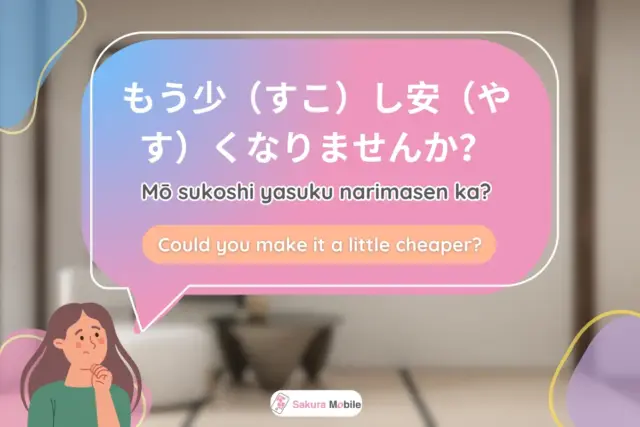
Moving in Japan is expensive, but you can slash your costs with these three insider tricks.
The "No Time Specified" Discount
Being flexible with your clock is the easiest way to save. Most companies offer a "Free Time" (free time) plan.
- How it works: You don't pick the exact start time. The mover fits you in whenever they have a gap.
- The Savings: Typically 10-30% off the standard price.
- Best for: Solo movers or anyone with a flexible moving-day schedule.
The "Mitsu-mori" Negotiation Trick
In Japan, price negotiation is expected. Never accept the first quote.
- The Strategy: Get at least three quotes (mitsu-mori). Show Mover A the lower price from Mover B and ask: "Can you match or beat this?"
- The Result: Many companies will drop their price by 10,000-50,000 or offer free boxes to win your business.
Avoid Disposal Fees (Sell Instead)
Getting rid of old furniture isn't free. You usually have to pay "Sodai Gomi" (Bulk Waste) fees for every large item.
- The Problem: Disposal fees can cost 2,000 to 10,000+ per item.
- The Solution: Use Mercari or Facebook "Sayonara Sales." Even giving an item away for free saves you the cost of the disposal sticker.
Pro Tip: While you are saving on the truck, don't cut corners on your setup. Sakura Mobile Home WiFi saves you from the "Internet Gap" by getting you online the moment you move in—no installation fees or 4-week waits required.
Avoid the "Internet Gap" (Setup Your WiFi Now)
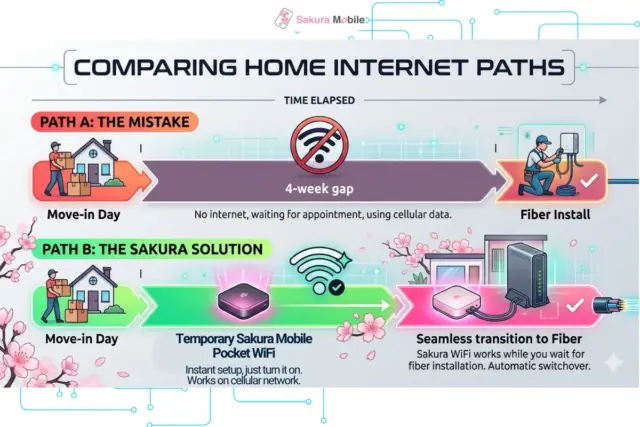
The biggest mistake expats make is waiting until move-in day to order internet. This leads to the Internet Gap—weeks spent without WiFi while you wait for a technician.
What is the Internet Gap?
It is the "dead zone" between your move-in date and your fiber installation.
- The Wait: Usually 2-4 weeks, but often 1 month+ in March and April.
- The Problem: You move in, you can't work, stream, or call home. Cafe WiFi is slow and mobile data is expensive.
The Smart Solution: Stay Connected From Day One
You don't have to wait. Sakura Mobile offers two ways to skip the gap:
Option 1: Sakura Mobile Home WiFi (Instant Setup)
- How it Works: Plug-and-play. No technicians or drilling needed.
- Best for: Getting high-speed internet the minute you walk into your new home.
Option 2: Sakura Fiber (With Free Rental WiFi)
- How it works: Apply for long-term fiber early. We provide a Pocket WiFi at no extra cost while you wait for the technician.
- Best for: A permanent, high-speed setup with zero downtime.
Pro Tip
Order your internet at least 4 weeks before your move. That ensures your router arrives before your moving truck does!
Top 3 Moving Mistakes to Avoid in Japan
Moving in Japan is different. A small misunderstanding can lead to high costs and no hot water. Avoid these common traps:
Waiting Until March to Book
March and April are "Peak Season" in Japan. If you wait until the last minute:
- Prices triple: a 50,000 JPY move can easily cost 150,000+ JPY.
- Zero availability: You might not find a mover at all.
- The Fix: Book your over and your internet 4-6 weeks in advance.
Thinking Utilities are Automatic
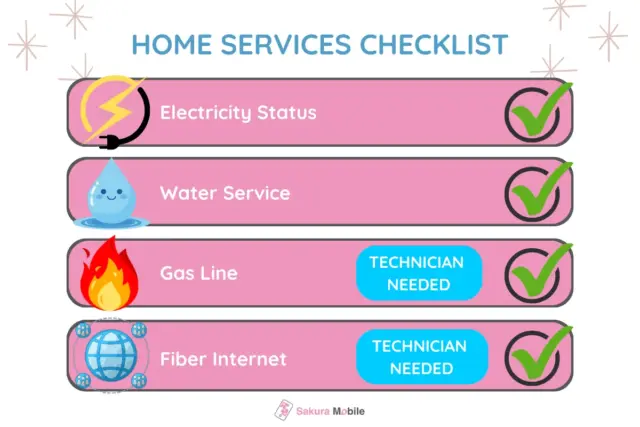
Your new apartment will be dark and cold if you don't call ahead. You must manually activate:
- ⚡Electricity & 🚰Water: Can usually be done online or by phone call.
- 🔥Gas: Requires an in-person visit. You must schedule a technician to turn it on, or you won't have hot water.
- The Fix: Schedule these appointments before you move.
Ignoring the "Internet Gap"
Most people assume the internet "comes with the room." In Japan, it rarely does.
- The Risk: You move in and wait 4+ weeks for a fiber technician.
- The Fix: Order Sakura Home WiFi for instant, plug-and-play internet on day one.
Moving FAQs
- How much does it cost to move in Japan?
A: In 2026, local moves for a single person cost 30,000–60,000 JPY. Families average 90,000–220,000 JPY. Long-distance moves (500 km+) start at 300,000 JPY.
Note: Your total budget (including apartment fees) can reach 500,000 JPY.- When is the most expensive time to move?
A: March and early April are peak season. Prices double or triple due to the new school and work year. To save, move in January, June, or November. Moving on a weekday can also save you 10,000-20,000 JPY.
- When should I book my move and internet?
A: Book your mover 2-3 months early for March moves. Fiber internet takes 4-8 weeks to install. We recommend ordering Sakura Fiber 2 months early or getting Sakura Mobile Home WiFi on day one.
- Q: Which English-speaking moving companies are best for expats?
A:
- Best Overall: Best Moving Service
- Best for Tokyo: Tokyo Move
- Best for Families/Pets: PROROW Transport
- Best for Students/Budget: Tokyo Helping Hands
- Q: Can I negotiate my moving quote?
A: Yes! Haggling is expected. Get at least three quotes (Mitsu-mori). Show a lower quote to your preferred mover and ask: "Mo sukoshi yasuku narimasen ka? "(Can you make it a bit cheaper?) to save 10-40%.
- Q: What hidden fees should I watch out for?
A: Watch for Stair Fees (3,000-5,000 JPY per floor without elevators) and Washing Machine Setup (10,000+ JPY). To avoid a weeks-long "Internet Gap" while waiting for fiber, many expats use Sakura Mobile Home WiFi to stay online immediately.