Moving to Japan and not sure which internet option to get? You're not alone. It's one of the first things new residents have to figure out—and most of the helpful information is written in Japanese or buried in old forum posts.
This guide makes it simple. Whether you just arrived, work from home, game online, or are only staying for a few months, here's everything you need to know—in plain English.
TL;DR: Quick Guide to Japan Internet Setup
Fast Answer: Long-term residents needing low latency should choose Fiber (Hikari), while short-term expats or remote workers needing instant setup should opt for 5G Home WiFi.
| Details | Fiber Internet (Sakura Mobile) | Home WiFi (Sakura Mobile) |
|---|---|---|
| Time to Get Online | 1-4 weeks (technician required) | Same day–a few days |
| Max Speed | Up to 10 Gbps | Up to 2.5 Gbps |
| Latency (ping) | Under 15ms | 30-50ms |
| Portable? | No—fixed to your address | Yes—moves with you |
| Best For | Gamers, remote workers, families | Expats, students, short-term stays |
| Starting Price | 6,980 yen/month | 6,980 yen/month |
| Annual Contract | Not required | Not required |
| English Support | Full | Full |
| Japanese Credit Card Needed? | No | No |
- TL;DR: Quick Guide to Japan Internet Setup
- What Is Fiber Internet in Japan?
- What Is Home WiFi in Japan?
- Fiber vs. Home WiFi: How They Compare
- How Much Speed Do You Actually Need?
- Which One Is Right for You?
- What If My Building Doesn't Allow Fiber Installation?
- Why Choose Sakura Mobile?
- Frequently Asked Questions
What Is Fiber Internet in Japan?
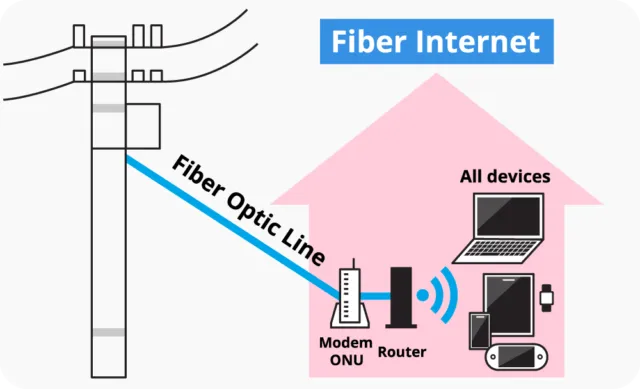
Fiber internet (光インターネット, hikari intānetto) sends data through thin glass cables using light. It's the fastest and most reliable home internet option in Japan.
Japan's fiber network is run mainly by NTT FLET'S Hikari, which reaches over 90% of the country. Most fiber plans today use the Hikari Collaboration (光コラボ) system. This bundles your line fee and internet service into one monthly bill—so you only deal with one company, not two.
Fiber Internet: Pros and Cons
| Pros | Cons |
|---|---|
| Fastest speeds available—up to 10 Gbps | Takes 1–4 weeks to set up |
| Lowest ping—great for online gaming | Stays at one address; can't take it with you |
| Stable upload and download speeds | May need your landlord's OK for installation |
| Unlimited data | Not great for shared housing or short stays |
| One simple monthly bill | Not ideal if you need internet within a few days |
Just arrived and need internet now? Sakura Mobile rents out temporary WiFi devices, so you stay connected while your fiber is being set up.
What Is Home WiFi in Japan?
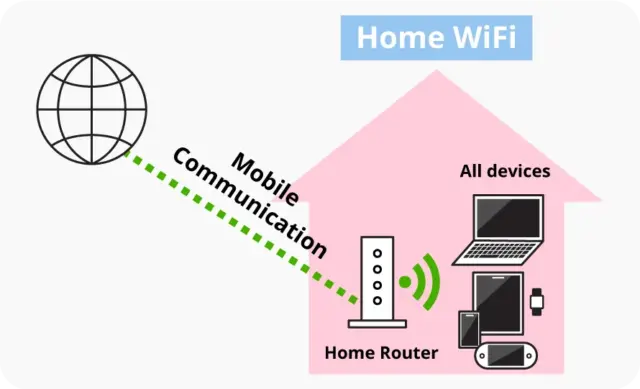
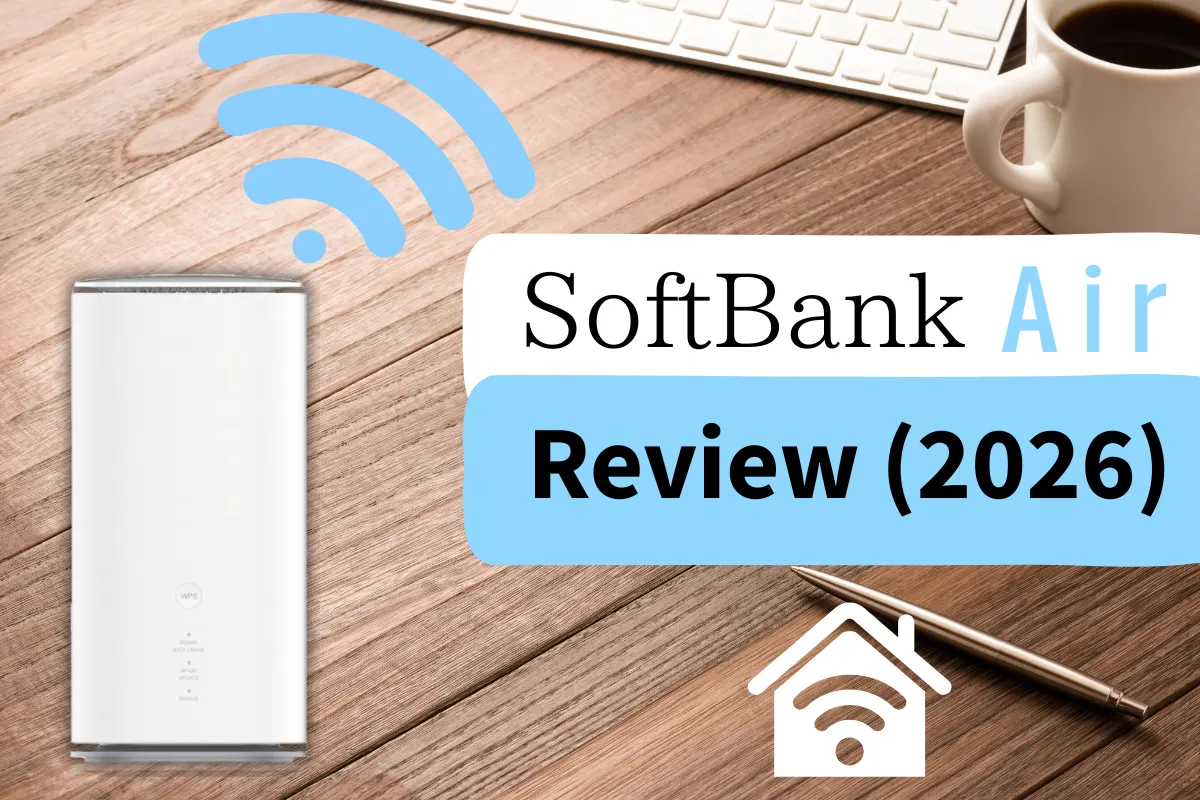
Home WiFi (also called a home router or 5G home router) uses Japan's mobile network—4G or 5G—to connect your home to the internet. A small router receives the signal and spreads it as WiFi through your place.
There are no cables to run, no technicians to schedule, and no waiting. The router ships to your door. You plug it in, and you're online.
This is especially popular with expats and new arrivals because it skips the hardest parts of getting internet in Japan—the Japanese paperwork, the long wait times, and the need for a local credit card.
Home WiFi: Pros and Cons
| Pros | Cons |
|---|---|
| Ready the same day—no installation needed | Speeds can vary based on signal and traffic |
| Portable—take it when you move | Slightly higher ping than fiber (30-50ms) |
| No landlord approval needed | Can slow down during busy evening hours |
| Great for short-term stays and frequent movers | May be affected by bad weather |
| No Japanese credit card required | |
| Unlimited data |
Fiber vs. Home WiFi: How They Compare
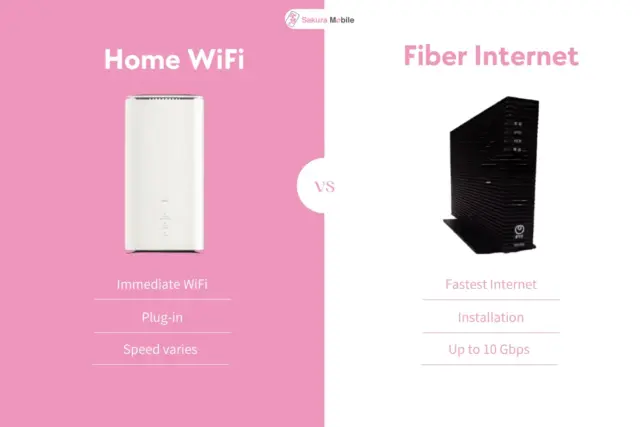
Speed
Fiber gives you steady upload and download speeds. That matters when you're on video calls, live streaming, or sending large files.
Home WiFi handles everyday tasks just fine, but speeds can shift based on where you live and how busy the network is at any given time.
| Details | Fiber (Sakura Mobile) | Home WiFi (Sakura Mobile) |
|---|---|---|
| Download Speed | Up to 10 Gbps | Up to 4.2 Gbps |
| Upload Speed | Up to 10 Gbps | Up to 286 Mbps |
| Consistency | Very steady | Can vary |
Setup
Fiber needs a technician to run a cable to your home. In Japan, this generally takes 1 to 4 weeks—sometimes longer between February and April, when lots of people are moving. If your building needs drilling, you'll need your landlord's written permission first. Sakura Mobile can handle that conversation for you.
Home WiFi is as easy as it gets. The router arrives in the mail. Plug it in. Done. The whole thing takes under five minutes.
Reliability
Fiber runs through glass cables, so rain, storms, and heavy network traffic don't slow it down. It's the most reliable option available.
Home WiFi can dip a little during busy hours—usually between 7 and 11 PM—and may be slightly affected by bad weather. How well it performs also depends on the mobile signal strenght at your specific address.
Portability
Fiber is tied to one address. If you move, you start the setup process all over again.
Home WiFi goes where you go. Just unplug it, pack it, and plug it in at your next place. For anyone who moves a lot or isn't sure how long they'll be in Japan, that's a big plus.
Cost
Sakura Mobile's Home WiFi and Fiber Internet plans start at 6,980 yen/month with no annual contract. The 10 Gbps fiber plan starts at 9,480 yen/month.
There's no separate NTT line fee to worry about—it's all rolled into one bill.
Both plans have a one-time setup fee of 5,500 yen. Fiber internet also has a separate installation cost, which ranges from 3,300 yen to 25,300 yen, depending on your building type and how much wiring work is needed. Home WiFi has no installation cost—just the flat setup fee. Sakura Mobile will confirm your exact fiber installation cost before you commit.
| Details | Fiber Internet 1 Gbps | Fiber Internet 10 Gbps | Home WiFi |
|---|---|---|---|
| Monthly Price | 6,980 yen | 9,480 yen | 6,980 yen |
| Setup Fee | 5,500 yen | ||
| Installation Cost | 3,300 yen–25,300 yen | None | |
| Annual Contract | Not Required | ||
| Hidden Fees | None | ||
How Much Speed Do You Actually Need?
Faster isn't always better—or necessary. Most households get by just fine without the fastest plan available. Here's a simple breakdown:
| Activity | Speed Needed | Fiber | Home WiFi |
|---|---|---|---|
| 4K Video Streaming | 25 Mbps | ✅ Yes | ✅ Yes |
| Competitive Online Gaming | 25 Mbps + low ping | ✅ Best (<15ms) | ⚠️ OK (30-50ms) |
| Video Calls (Zoom, Teams, FaceTime) | 10 Mbps | ✅ | ✅ |
| Multiple People Using the Internet at Once | 50-100+ Mbps | ✅ Ideal | ⚠️ Depends on location and usage type |
| Browsing, Email, Messaging Apps | 1-5 Mbps | ✅ | ✅ |
Speed vs Ping—what's the difference?
- Speed (Mbps) is how much data your connection can carry.
- Ping (ms) is how fast your device talks back and forth with a server.
For everyday use, ping under 50ms is more than enough. For competitive gaming, fiber's under-15ms ping is noticeably better than Home WiFi's 30-50ms range.
Which One Is Right for You?
I just moved to Japan and need internet right away
Go with Home WiFi.
Fiber takes at least 1 to 4 weeks to get running. If you need to work, study, or just stay in touch from day one, Home WiFi is your only real option. There's no waiting, no appointments, and no Japanese forms to fill out. Your router arrives in the mail and works as soon as it arrives.
I'm a serious gamer or live streamer
Go with Fiber Internet.
In competitive gaming, ping is everything. Fiber's under-15ms ping is much lower than the 30-50ms you'd get with Home WiFi—and your connection stays steady even during busy hours. If you stream live, fiber's fast upload speed means your broadcast won't drop in quality or buffer mid-session.
I'm an ALT or staying less than a year
Go with Home WiFi.
ALT programs can take you to rural areas, school housing, or new locations mid-term. Home WiFi works anywhere wherever 4G or 5G coverage is available, doesn't need to be permanently installed, and moves with you if things change. With no long-term contract, you won't be stuck if your circumstances change.
I'm not sure how long I'll stay in Japan
Start with Home WiFi, then switch if you need to.
If you don't know your timeline yet, Home WiFi is the safer bet. It covers all the basics—streaming, video calls, working from home—and you can upgrade to fiber later if you settle in and want more speed or steadier connection. Neither plan locks you into a contract, so switching is easy.
What If My Building Doesn't Allow Fiber Installation?
This comes up a lot in Japan, especially in older apartment buildings and shared housing. Getting fiber installed usually means running cables and possibly drilling, which need the building owner's approval.
Sakura Mobile can talk to your landlord in Japanese to sort this out. They'll confirm whether your building can support fiber, explain the process, and handle any paperwork. Many buildings that seem like they won't work actually can—it just takes the right conversation.
If fiber really isn't an option at your address, Home WiFi is a solid backup for everyday internet use.
Why Choose Sakura Mobile?

Most internet providers in Japan are set up for Japanese residents—they expect you to have a Japanese credit card, sign a multi-year contract, and handle everything in Japanese. Sakura Mobile is built for people like you.
- Full English Support—real people, no translation apps
- No annual contract—on both Fiber and Home WiFi plans
- One simple bill—no separate NTT line
- Japanese negotiation support—they'll handle your landlord, so you don't have to
- Rental Temporary WiFi—stay online while your fiber is being set up.
- Plans from 6,980 yen/month—no hidden fees
- 10 Gbps fiber available—9,480 yen/month
Frequently Asked Questions
- Q: Can I get fiber internet in Japan without a Japanese credit card?
A: Yes. Sakura Mobile accepts payment options that don’t require a local credit card, which makes it easy for international residents who haven’t set up Japanese banking yet.
- Q: How long does fiber installation take in Japan?
A: Usually, 1 to 4 weeks from when you apply. It can take longer between February and April, which is Japan’s busiest moving season. While you wait, Sakura Mobile can rent you a temporary Pocket WiFi to keep you connected.
- Q: Is home WiFi fast enough for gaming in Japan?
A: For casual gaming, yes. Home WiFi’s 30-50ms ping works fine for most games. If you play competitively and every millisecond counts, fiber’s under-15 ms ping is a clear step up.
- Q: What's the best internet option for ALTs
A: Home WiFi. It works in rural areas where fiber may not be available, doesn’t need permanent installation, and isn’t tied to a long-term contract—which matters if your placement moves or changes.
- Q: Does Sakura Mobile require a contract?
A: No. Neither the fiber nor the home WiFi plan requires an annual contract.
- Q: What happens to my internet when I move apartments in Japan?
A: With Home WiFi, just unplug the router and plug it in at your new place—that's it. With fiber, you’ll need to set up a new installation. Sakura Mobile can handle that process in Japanese for you.
- Q: How is home WiFi different from Pocket WiFi?
A: Home WiFi is a plug-in router that stays at your place and gives you strong coverage throughout your apartment. Pocket WiFi is a small, battery-powered device you carry around for internet on the go. If you need home internet, go with the home router. If you need internet while traveling or commuting, Pocket WiFi is the better fit. Sakura Mobile offers both.
- Q: What's the difference between NTT Hikari and an ISP?
A: NTT is the network of physical cables that runs through Japan—think of it as the pipes. An ISP (Internet Service Provider) is the company that sends internet through those pipes to your home. With Sakura Mobile’s fiber internet plan, both are handled by Sakura Mobile and rolled into a single bill.
- Q: Can I setup internet in Japan if I don't speak Japanese?
A: Yes. Sakura Mobile takes care of the whole process in English—including any talks with your landlord or building manager that need to happen in Japanese.
- Q: Which is better for video calls—fiber or home WiFi?
A: Both work well. Video calls on Zoom, Google Meet, FaceTime, or Teams need about 10 Mbps, which both options can easily handle. If you’re on long calls all day or have a big team meeting, fiber’s steadier connection lowers the chance of quality dips at busy times.