
This guide is written by Sakura Mobile, a Japan-based mobile provider operating since 2014. We compare our own service against other Japan SIM and eSIM options throughout, and we point you to another provider whenever that's the more honest answer.
Picking the right prepaid SIM card or eSIM for Japan in 2026 is less about chasing the cheapest sticker price and more about matching a plan to your phone, your trip, and how much data you'll actually use once you land. A tourist on a quick week-long trip with light data needs is shopping in a completely different market than a remote worker on a six-week stay—and the cheapest plan for one is usually the wrong plan for the other.
This guide compares physical SIMs and eSIMs across the six most common traveler situations:
- Budget short trips
- Heavy data use
- English support
- Mid-trip flexibility
- Long stays
- Pure connection speed
For each one, we name the providers we think genuinely lead—including the cases where Sakura Mobile isn't the right pick.
One quick note before we get into the comparisons: a regulatory change in April 2026 affects every SIM and eSIM purchase in Japan, including the ones we cover below.
- Quick Answer: Which Japan SIM Card Should You Choose?
- Compare by Traveler Type
- How We Ranked These Options
- Why Travelers Choose Sakura Mobile
- eSIM, Physical SIM Card, or Pocket WiFi: Choosing Your Format
- Understanding Your eSIM Options for Japan
- When and How to Install Your Japan SIM or eSIM
- How Much Data Do You Need in Japan?
- Japan SIM Card FAQ
- Who Should Choose Sakura Mobile—and Who Shouldn't
- Ready to Pick a Plan?
- Related Guide

⚠️ New for 2026: ID is now required for all Japan SIM and eSIM purchases
Since April 1, 2026, Japan's Ministry of Internal Affairs and Communications (MIC) has required a passport or residence card ID for every SIM and eSIM purchase — including data-only plans, major carriers, and tourist providers. For tourists, a passport does the job. You'll see a quick ID check at airport pickup counters and during online verification with most providers. The rule applies to physical SIM cards and eSIM activations equally, so it's worth building into your arrival plan whichever format you go with.
Quick Answer: Which Japan SIM Card Should You Choose?
If you'd rather skip the details and jump to a recommendation, here's the short version.
| Traveler type | Start with | Why |
|---|---|---|
| First-time visitor who wants English setup help | Sakura Mobile | Japan-based English support across physical SIM, eSIM, and Pocket WiFi |
| Short trip, low data, comfortable with self-service | Nippon SIM or IIJmio/BIC SIM (physical), or global eSIM app | Lowest entry prices |
| Heavy data hotspot, or remote work | Sakura Mobile Unlimited Data | Predictable daily allowances and Japan-based support |
| Plans may change mid-trip | Sakura Mobile (Fixed Data or 3GB/day) | Top-ups and extensions handled by Japan-based support |
| Long stay (30-90 days) | Sakura Mobile or Nippon SIM | One plan covers the full 90-day tourist visa window |
| Want the fastest possible connection | Sakura Mobile Unlimited Data or 3GB/day | docomo and KDDI 5G |
Compare by Traveler Type

The next six sections each cover a different kind of trip. Skip to the one that matches you, or read straight through if you're still figuring out what kind of traveler you are.
Group 1: Budget-Conscious Short Trips
If you're in Japan for about a week, only need data, and you're comfortable with basic setup on your own, the cheapest options really are cheap. At the budget end, physical SIMs offer the best per-gigabyte value, whether you buy them ahead online or pick one up in person. Global eSIM apps go even lower on absolute entry price, but only work if your phone supports eSIM.
| Provider & plan | Format | Data & validity | Standard price | Network | Where it falls short |
|---|---|---|---|---|---|
| Nippon SIM 5 GB | Physical SIM or eSIM | 5 GB / 30 days | From 2,480 yen (retailer-dependent; reported at 2,480 yen in 2026 DHA Mobile page) | docomo | No top-up beyond the original plan; data only |
| IIJmio / BIC SIM Japan Travel SIM 3 GB | Physical SIM | 3 GB / 30 days | ~2,480 yen at BIC Camera (open-priced; varies) | docomo | Sold only at retail stores and select convenience stores in Japan; pricing varies by retailer |
| Sakura Mobile Fixed Data | eSIM | Flexible 3+ day validity, top-up available | From around 2,000 yen (see Fixed Data Plans) | docomo | Higher entry price than Nippon SIM |
| Airalo Moshi Moshi 1 GB | eSIM | 1 GB / 3 days | ~$4 (~600 yen) | SoftBank + KDDI | 4G only on the entry plan; eSIM only |
Prices verified May 22, 2026. USD prices converted at 150 yen = $1. Standard pricing only—no campaigns or first-purchase discounts.
For the lowest entry price on a physical SIM you can buy before you fly, Nippon SIM is hard to beat. If you'd rather sort it out after you arrive and a BIC Camera is on your route, IIJmio's Japan Travel SIM is the easiest in-country pickup. Sakura Mobile's Fixed Data plans cost a little more, but you get English-speaking support if anything goes sideways and if you need more data. For very small data needs on an eSIM-capable phone, Airalo's entry-level Moshi Moshi plan is still cheaper.
Group 2: Heavy Data, Social Media, Remote Work
If you're working remotely, on a lot of video calls, uploading content, or just used to burning through 2 GB or more a day, the right plan is usually unlimited—but the word "unlimited" doesn't mean the same thing across providers. Most plans use a fair usage policy (FUP) that reduces speeds after a set data threshold. This limit is usually applied as either a daily cap or monthly limit. Daily and monthly hotspot allowances vary even more, and those are the limits that hurt remote workers most.
| Provider & plan | Format | High-speed allowance | Hotspot / Tethering | Network | Standard price |
|---|---|---|---|---|---|
| Sakura Mobile Unlimited | Physical SIM or eSIM | No daily high-speed cap on phone use | Plan-specific: 6 GB on the 7-day plan, 9 GB on the 10-day, 30 GB on the 31-day | au (KDDI) 5G | SIM / eSIM from 4,400 yen (4-day plan) |
| Sakura Mobile 3GB/day | Physical SIM or eSIM | 3 GB/day high-speed, then 200 Kbps | Unlimited, but subject to fair-use 3 GB/day | docomo | SIM: From 3,850 yen (incl. tax) eSIM: From 3,300 yen (incl. tax) |
| Holafly Japan Unlimited | eSIM only | No daily cap; fair-usage policy after ~90 GB/month | 500 MB/day hotspot, then throttled | KDDI | ~$27 / 7 days to ~$69 / 30 days (~4,000 yen-~10,400 yen) |
Prices verified May 22, 2026. USD prices converted at 150 yen = $1. Standard pricing only.
For heavy data on a Japanese network with a clearly published daily allowance and English-speaking support if something gets bumpy, Sakura Mobile's travel eSIM plans are the strongest fit. Holafly is one of the best-known unlimited eSIM brands globally and works fine for phone-only use—but the 500 MB/day hotspot cap is a sharp limit if you plan to tether a laptop often.
Group 3: English Support and Easy Setup
If this is your first trip to Japan, you've had SIM setup issues before, you're sorting things out for a family member, or you simply want a real person to call if something goes wrong after you land—this is the section to read closely. Self-service eSIMs are great when everything works on the first try. Japan-based human support matters most on the days it doesn't.
| Provider & plan | Support channels | Setup Method | What happens if setup fails after landing |
|---|---|---|---|
| Sakura Mobile | Contact form, email, in-person at Shinjuku office, or airport counters (Kansai and Fukuoka) | Physical SIM via airport pickup or hotel delivery, or eSIM QR via email | Japan-based team can troubleshoot or replace your SIM or eSIM, including in person at the Tokyo office, or airport counters |
| IIJmio / BIC SIM | In-store at BIC Camera; online support | Bought in-store at BIC Camera, Yodobashi, Softmap, and convenience stores | Re-visit a BIC Camera; remote help is limited |
| Airalo | In-app chat, live chat 24/7 | eSIM QR via app | App chat only; no Japan-based presence |
The strongest fit here is Sakura Mobile if you want a Japan-based team that speaks English, supports phone and in-person contact, and handles physical SIM and eSIM issues through the same channels. If you're already in Japan and prefer to walk in and buy something off a shelf, IIJmio's BIC SIM is the easiest in-person purchase. Airalo and other app-based providers handle most issues over chat—provided your phone is online enough to use chat in the first place, which is the catch.
Group 4: Top-Ups, Extensions, and Mid-Trip Changes
Some trips don't go to plan. You stay longer than expected, burn through your data faster than expected, or change cities halfway through and suddenly need more. The cheapest SIM stops being cheap the moment you have to buy a second one to cover a week you didn't budget for, so it pays to think about flexibility before you pick a plan.
| Provider & plan | Top-up? | How to top up | Extension? | Lead time |
|---|---|---|---|---|
| Sakura Mobile Fixed Data | Yes | Access your eSIM management page | Yes (up to 90 days) | Typically same-day |
| Sakura Mobile Unlimited Data/ 3GB/day | N/A — unlimited | — | Yes, for 3GB/day plans. For the Unlimited Data plans, another SIM card or eSIM plan needs to be purchased (up to 90 days) | Same-day |
| Nippon SIM | No top-up beyond validity | — | No — buy a new SIM | — |
| Airalo / Nomad | Yes, via app | Self-service | Plan re-purchase | Real-time |
Sakura Mobile is a strong fit if you may need to extend your plan length (not just add on data), with changes handled through Japan-based support. Fixed Data and 3GB/day plans support extensions within the validity period, while the Unlimited Data plans do not and require purchasing a new SIM or eSIM.
Nippon SIM is cheap up front but rigid—when the plan ends, you're buying another SIM. App-based eSIMs handle in-app top-ups well, which is a real plus if you're happy doing it yourself.

💡 Most providers only allow refunds before activation, and policies vary widely. If you plan doesn't activate after you land, you may not be eligible for a refund. We cover what to do in the FAQ below.
Group 5: Long-Stay Travelers (30-90 Days)
Trips of 30 days or more sit in their own pricing tier. A working holiday before the residence card arrives, a long creative trip, a sabbatical, an extended visit to family—at this length, plan structure matters more than the headline price, and "can I extend without buying a whole new SIM?" becomes the most important question.
| Provider & plan | Format | Maximum continuous validity | Data Structure | Network |
|---|---|---|---|---|
| Sakura Mobile Fixed Data | eSIM | Up to 90 days | Set GB allowance with top-up and extension available | docomo |
| Sakura Mobile 3GB/Day | Physical SIM or eSIM | Up to 93 days (multi-SIM bundle) | 3 GB/day high-speed, then reduced | docomo |
| Sakura Mobile Unlimited Data | Physical SIM or eSIM | Up to 93 days (multi-SIM bundle) | No daily high-speed cap on phone use; hotspot up to 30 GB on the 31-day plan | au (KDDI) |
| Nippon SIM | Physical SIM | Validity varies (10-365 days) | Fixed total: 3-100 GB plans | docomo |
Prices verified May 22, 2026. Standard pricing only.
For long stays (30-90 days), plan structure matters more than upfront price—especially how the provider handles extensions versus requiring a new plan. Sakura Mobile's Fixed Data and 3GB/day plans cover the full 90-day tourist visa window on a single plan (or a multiple-eSIM bundle for the longest durations), with Japan-based support along the way. Nippon SIM is cheaper per plan if you're confident about how much data you'll use upfront—but when you hit the cap, you're buying a new SIM.
One question that comes up a lot for long-stay travelers deserves its own callout:
💡 Can long-stay tourists get a Japanese phone number?
Yes. Most Japan tourist SIMs are data-only, but Sakura Mobile's Voice and Data SIM card is available to tourists with a passport, with pickup at Narita, Haneda, Kansai, or our Shinjuku office. If you only need occasional calls, a data-only plan plus WhatsApp, LINE, or FaceTime over data may be enough. For longer stays where you'll need a real Japanese number for restaurants, bookings or services, a Voice and Data SIM is the more reliable option. For the full picture, see our guide to Getting a Japanese phone number.
Group 6: Fastest 5G Plans for Japan
The last persona is the one where speed itself is the priority—content creators uploading videos, anyone who lives on video calls, streamers, or travelers who've been burned by laggy data on a past trip and don't want a repeat. The fastest plans are almost always 5G, on networks with strong coverage in cities and beyond, with either no daily high-speed cap or a very generous one.
| Provider & plan | Format | Network | High-speed allownace | Hotspot allowance | Notes |
|---|---|---|---|---|---|
| Sakura Mobile 3GB/day | Physical SIM or eSIM | docomo 5G | 3 GB of high-speed data per day | Tethering (hotspot) available | Tested by Tokyo Cheapo |
| Sakura Mobile Unlimited Data | Physical SIM or eSIM | au (KDDI) 5G | No daily cap on data use | 6 GB on 7-day, 30 GB on 31-day | Tested by Tokyo Cheapo |
| Ubigi Japan Unlimited | eSIM only | docomo + KDDI 5G | Unlimited with FUP—reduced after ~25-60 GB depending on plan length | Tethering (hotspot) available | App required |
| Airalo Moshi Moshi 20 GB 5G | eSIM only | SoftBank + KDDI 5G | 20 GB fixed, then need to top up | No dedicated hotspot cap— up to plan allowance | 5G in supported areas |
Sakura Mobile's Unlimited Data plan is the strongest fit when you want fast data across the whole trip with no daily cap to worry about, plus Japan-based support if any issues come up. Ubigi and Airalo are strong picks if you'd rather handle everything yourself via app.
How We Ranked These Options
We prioritize the factors that matter most for travelers in Japan:
- English-language support: Setup and connection issues are common, especially right after arrival, so accessible support is critical.
- Network and coverage: The underlying carrier (docomo, au, SoftBank) directly affects speed, stability, and performance outside major cities.
- Data and validity: Plans are evaluated on whether they realisitically match trip length and usage, not just how they're marketed.
- Pricing transparency: We compare standard pricing only, excluding limited-time promotions.
- Flexibility: Includes top-ups, extensions, and how easy it is to adjust mid-trip.
- Usage limits: We check hotspot availability and fair usage policies behind "unlimited" claims.
- Delivery and setup: Pickup and delivery format, including options for travelers who want a physical SIM card or need to verify connectivity before leaving the airport.
We verify all information against official provider pages and review this guide regularly. Where providers do not publish specific data (such as speeds), we reference established third-party testing. Unsupported claims are removed.
How to Read These Recommendations
Every recommendation in this guide points to the provider we think genuinely fits that situation—including the cases where that isn't us. The comparisons above reflect that.
If you'd like independent takes, Tokyo Cheapo, Cybernews, and MyBestSim have each reviewed Sakura Mobile's service in detail.
What our clients have to say
Why Travelers Choose Sakura Mobile
Sakura Mobile is generally a better fit for travelers who prioritize reliability, flexible setup options, and access to English-language support:
- Plans that match your stay: Options cover up to 90 days, aligning with the full tourist visa window
- English-language support in Japan: Available via phone, email, and in-person support, including a Shinjuku office and counters at Kansai and Fukuoka
- Flexible delivery and setup; Airport pickup, hotel delivery, or eSIM, with option to confirm connectivity early in your trip.
- Multiple options in one place: SIM, eSIMs, and Pocket WiFi can be managed together, which can simplify changes mid-trip.
- Established provider: Operating since 2014, with 400,000+ customers and access to major Japanese networks (docomo and au).
This makes it more suitable for travelers who want a stable connection and accessible support, rather than those focused purely on the lowest upfront price or fully self-service options.
💡 What if our eSIM doesn't work in your phone?
If you're not sure your phone will handle an eSIM, we offer an option Compatibility Insurance add-on (550 yen) at checkout. It covers you in three cases:
- Your device doesn't support eSIM
- Your phone is carrier-locked
- Our eSIM doesn't work for a reason we can't pin down after troubleshooting
eSIM, Physical SIM Card, or Pocket WiFi: Choosing Your Format

Before comparing providers, it helps to settle which format you actually want—because the answer depends on your phone and your travel style.
| Format | Best for | Setup time | Phone number option for tourists | Main limitation |
| Physical SIM Card | Phones without eSIM support, travelers who prefer a swappable card, or in-country pickup | Same day (airport pickup) or next day (hotel delivery) | Yes | Requires SIM tray and a carrier-unlocked phone |
| eSIM | Recent, eSIM-compatible, carrier-unlocked phones; instant setup | Minutes via QR code | Yes | Phone must support eSIM and be unlocked for the eSIM line |
| Pocket WiFi | Families, groups, multiple devices on one plan | Same day (airport pickup) or next day (hotel delivery) | No (data only) | Extra device to carry, charge, and return |
A physical SIM is the right pick when your phone doesn't support eSIM, or when you want a backup card you can hand over at a counter if something goes wrong. The trade-off is logistics—you have to pick the card up or have it shipped.
An eSIM wins on speed of setup: installed in minutes after purchase, no shipping, no airport counters. Most Japan tourist eSIMs are data-only, and your phone needs to support eSIM and be carrier-unlocked.
A Pocket WiFi rental is a small router that connects multiple devices to one data plan. Better economics than buying three separate SIMs for a family of three, and it also works if your phone is not compatible with Japan SIM cards or eSIMs.
Understanding Your eSIM Options for Japan


💡 For a deeper look at eSIM-specific provides, plans, and activation, see our Best eSIM for Japan guide.
What Is an eSIM?
An eSIM is a digital SIM installed via QR code instead of a physical card. Most smartphones released after 2019 onward support eSIM, and US iPhone 14 models and later are eSIM-only (no SIM tray).
For travel in Japan, eSIMs are split into two main categories:
- Japan-based eSIM providers (Sakura Mobile, IIJmio): Connect directly to Japanese networks such as docomo, au, or SoftBank.
- Global eSIM apps (Airalo, Holafly, Nomad, Ubigi, Saily): App-based services that focus on quick setup and competitive pricing.
Key Differences That Matter
The main differences come down to network routing and support:
- Network routing and speed: Japan-based providers connect locally, while global eSIMs often use roaming-style routing, which can affect speed and app performance.
- Support and troubleshooting: Japan-based providers may offer in-person support in Japan, while global eSIM apps typically rely on online or chatbot-based support.
When and How to Install Your Japan SIM or eSIM
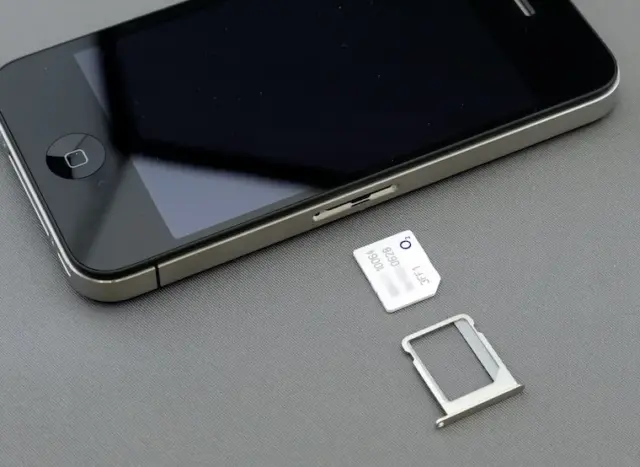
Installation timing matters more than people expect, because some plans start counting the day you install—and if you install too early, you can burn a day or two before you've even boarded the plane.
Sakura Mobile Activation Cheat Sheet
| Sakura Mobile plan | Install before arrival? | When does the rentla period start? | What happens if activated too early? |
| 3GB/day eSIM | No—install after you land | The day you install the eSIM | The install day counts as day 1; you choose when the plan begins |
| Fixed Data eSIM | |||
| Unlimited Data eSIM | We recommend installing after arrival or just before coming to Japan | When you first connect to a Japanese network | Some devices may show a temporary error if installed outside Japan |
| Physical SIM (all plans) | No—pickup or delivery in Japan | When you insert and activate the SIM | Not applicable |
Source: Sakura Mobile—Travel eSIM: when do I install or activate?
For provider-by-provider eSIM activation timing, see our Best eSIM for Japan guide.
Picking Up a Physical SIM at the Airport
Most Japan SIM providers, including Sakura Mobile, offer airport pickup at the major Japanese airports. The advantage is simple: a staff member can verify the SIM works in your phone before you walk away from the counter. The trade-off is the ten to twenty minutes it adds to your arrival on the other side of a long flight.
Hotel Delivery of a Japan SIM Card
Sakura Mobile can deliver a physical SIM to your hotel, which is the right call if you'd rather skip the airport counter and head straight for the train. You're without Japan-side data until you reach the hotel, but for most travelers, the hotel's WiFi covers that gap easily.
How Much Data Do You Need in Japan?
Most travelers either over-buy data because they're not sure, or under-buy because they think they'll be on WiFi more than they actually end up being. A rough sizing guide:
| Trip Length | Light Use | Normal Use | Heavy Use |
| 3–5 days | 1–3 GB | 5–10 GB | 3GB/day or Unlimited Data plan |
| 7–10 days | 3–5 GB | 10–20 GB | 3GB/day or Unlimited Data plan |
| 14+ days | 5–10 GB | 20–50 GB | 3GB/day or Unlimited Data plan |
| 30–90 days | 10–30 GB | 50–100 GB, or Unlimited | 3GB/day plan |
Usage Levels (Daily Estimates):
- Light (200-400 MB/day): Maps, messaging, light local media, and occasional photo uploads.
- Normal (500 MB-1.5 GB): Adds regular social media, music streaming, short videos, and translation apps.
- Heavy (2 GB+/day): Video streaming, video calls, hotspot use, remote work, and large uploads.
These daily ranges scale with trip length, which is why longer stays often move into higher data tiers or unlimited plans.
For a more detailed breakdown, our guide to how much data you need on a Japan trip goes deeper.
What "Unlimited" Actually Means
Almost no tourist plan in Japan is truly unlimited at full speed. Most follow one of three patterns:
- Daily high-speed cap, then throttle—a set amount of full-speed data per day, reduced to slower speeds until the next morning's reset. Sakura Mobile's 3GB/day plan gives 3 GB/day at full speed before slowing to 200 kbps; Airalo's Moshi Moshi caps at 3 GB/day; Nomad at 2 GB/day.
- Monthly fair-usage policy (FUP)—full-speed data reduced after a total monthly threshold rather than a daily one. Holafly's "Unlimited" plan applies a fair-usage policy around 90 GB per month.
- No daily high-speed cap—rare among Japan tourist plans. Sakura Mobile's Unlimited Data plan has no daily cap on data speed; hotspot allowances are capped separately and vary by plan length
The takeaway: check the daily and monthly numbers, not just the word "unlimited."
4G vs. 5G
For phone-only use in a Japanese city, 4G is usually fast enough that day-to-day browsing won't feel different from 5G. 5G matters most for big uploads (video files, cloud backups), serious hotspot use, or for travelers who've previously hit congestion-related slowdowns in dense areas. Sakura Mobile's plans run on docomo/au(KDDI), which are the networks Tokyo Cheapo consistently use for their local eSIM speed tests.
Hotspot Rules
Hotspot limits are where many "unlimited" plans become restrictive. Three common patterns:
- Plan-specific hotspot caps: Sakura Mobile Unlimited Data allows hotspot up to a fixed limit (e.g., 6 GB on the 7-day plan, 30 GB on the 31-day plan)
- Daily hotspot limits: Holafly limits hotspot to 500 MB–1 GB per day, then throttles speeds.
- Shared data usage: Most app-based eSIMs allow tethering, but hotspot use counts against the same daily high-speed allowance as your phone.
If you plan to tether a laptop regularly, the hotspot policy matters more than the headline "unlimited" claim.
Japan SIM Card FAQ
- Do I need to show ID to buy a Japan SIM or eSIM in 2026?
Yes. Japan's Ministry of Internal Affairs and Communications has required passport or residence card ID for all SIM and eSIM purchases since April 1, 2026, including data-only plans. A passport is the standard ID for tourists. The check happens at airport pickup counters and during online verification with most tourist providers.
- Where can I buy a Japan SIM card?
The main options are airport pickup at Narita, Haneda, Kansai, or Fukuoka (Sakura Mobile); hotel delivery (Sakura Mobile); in-store retail at BIC Camera, Yodobashi, and Sofmap for IIJmio's BIC SIM; convenience stores for selected IIJmio eSIM packs; online for Nippon SIM; and online direct from each provider's site.
- Which Japan SIM card is best for tourists?
For most short-term tourists, the best SIM card depends on three factors: length of stay, data usage, and English support needs.
- Sakura Mobile: A common choice for first-time visitors who want English-language support in Japan if issues come up.
- Nippon SIM: Typically the lowest-cost option for light usage if you're uncomfortable with self-setup.
- Unlimited plans: Often better value for heavy use, streaming or remote work compared to fixed-GB plans.
- What if my Japan SIM or eSIM doesn't activate after I land?
Check that mobile data is enabled on the right line, that international roaming is off (for Japan-based providers), and that APN settings match the provider's instructions. Restart your phone. Some 5G plans need to connect to a Japanese network before they'll activate for the first time, so an error in the air or right after landing isn't unusual. Sakura Mobile customers can reach Japan-based English support.
- Will my US iPhone work with a Japan SIM or eSIM?
If it's unlocked, yes. Apple's US iPhone 14 and later don't have a physical SIM tray, so users of those models will need a Japan eSIM rather than a physical SIM. Older US iPhones with a SIM tray work with either format. Confirm carrier-unlock status with your home carrier, and check device compatibility on each provider's compatibility page—you can find Sakura Mobile's compatibility list on our site.
- Physical SIM card vs. eSIM for Japan: which should I choose?
Pick an eSIM if your phone supports it and you're comfortable with QR-code setup. Pick a physical SIM if your phone doesn't support eSIM or if you prefer a staffed in-person pickup so a human verifies it works in your phone before you leave the airport.
FAQ
Who Should Choose Sakura Mobile—and Who Shouldn't

Sakura Mobile is the right fit if:
- You want Japan-based English support across phone, email, and in person
- You'd like one account covering physical SIMs, eSIMs, and Pocket WiFi rentals in Japan
- Your stay is long enough that top-up and extension flexibility matters
- You want a 5G unlimited plan in Japan with no daily high-speed cap on phone data
- You'd rather have a real person reachable if something goes wrong after you land
Another provider may suit you better if:
- Your only goal is the lowest price on a small data plan—Nippon SIM or IIJmio's BIC SIM will be cheaper
- You prefer fully app-based self-service with no human contact—a global eSIM provider is likely a better fit.
Ready to Pick a Plan?
If Sakura Mobile fits your trip, here's the fastest way to get set up:
- Tourists who want a physical SIM at the airport—pick a plan and select airport pickup at Narita, Haneda, Kansai, or Fukuoka. Browse travel SIM plans.
- Tourists who want an instant eSIM—choose Fixed Data, 3GB/Day, or Unlimited Data, and we'll email the QR code. See eSIM plans.
- Families or groups—one Pocket WiFi covers multiple devices on one plan. See Pocket WiFi rental.
- Questions before you order?—our Japan-based English team is reachable by phone, email, and at our Tokyo office. Contact Sakura Mobile.
Related Guide
- Best eSIM for Japan—a deeper comparison of eSIM-specific providers, plans, and activation
- Japan prepaid SIM: fixed data vs. unlimited plans
- How much data do you need during your trip to Japan?
- How to get a Japanese phone number
- Sakura Mobile vs. Holafly: which eSIM is best for your Japan trip?
- Sakura Mobile vs. Ubigi: which Japan eSIM should you trust in 2026?
- Airalo vs. Sakura Mobile: which eSIM really works in Japan?