Toothbrush. Check. Underwear. Check. Hairdryer...wait, would your hairdryer even work in Japan? Packing is the worst part of any trip. Nobody likes doing it, but everybody has to—and we always leave it until the last minute. There's procrastination, and then there's running around your apartment looking for your passport while the taxi waits outside.
At Sakura Mobile, we help travelers get connected in Japan every day. From choosing the right SIM or eSIM to figuring out what you'll need during your trip, we've learned what makes arriving in Japan easier. This guide focuses on the essentials for short-term travelers.
If you're heading to Japan for a week or two, not moving here, you're in the right place. Below are the 10 things we recommend packing, a few things you can leave at home, and a free checklist so you don't have to remember all of it by yourself.

Quick Answer
- Connectivity: An eSIM, Pocket WiFi, or SIM card so you have data the moment you land
- Power adapter: Japan uses Type A plugs at 100V. Devices from North America usually work as-is; devices from 230V regions like Europe need a voltage converter
- Shoes: Comfortable, slip-on shoes, since many temples, restaurants, and ryokans ask you to remove them
- Weather: A compact umbrella and a small hand towel for sudden rain or humidity
- Cash: Japan still runs mostly on cash, especially outside big cities
- Clothing: Shorts and casual clothes are fine in cities like Tokyo. Pack one smart-casual outfit for nicer restaurants or bars
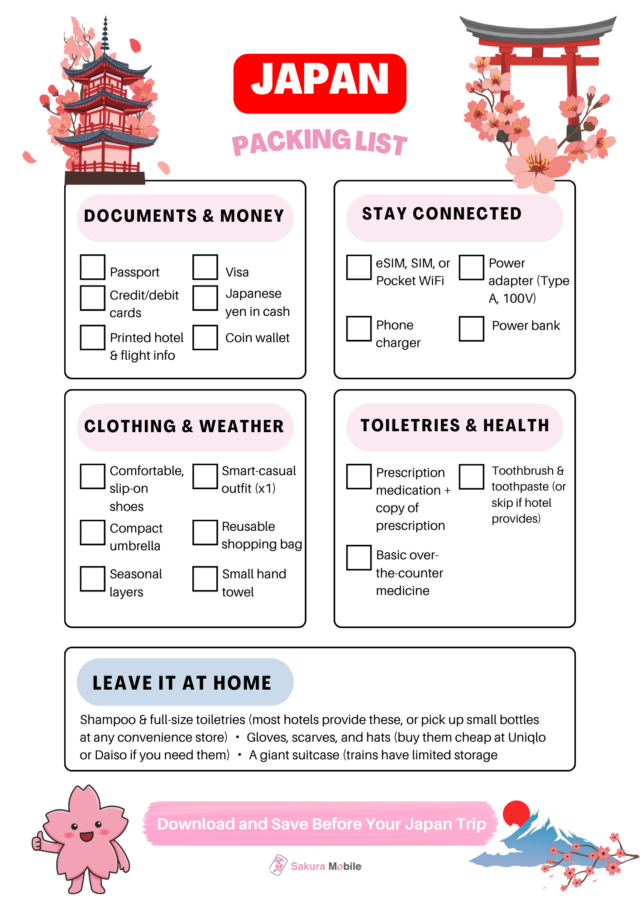
What to Pack for Japan
Connectivity (eSIM, Pocket WiFi, or SIM Card)
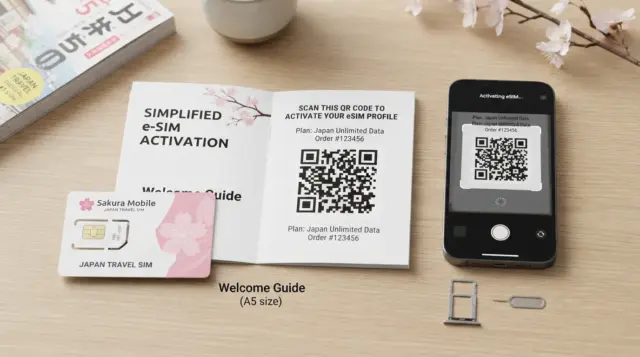
For most travelers, an eSIM is the easiest way to get online the moment you land. No counter, no line, no card to lose. A Pocket WiFi device is worth it if you're traveling with a group and want to share one connection. A physical SIM card still works well if your phone doesn't support eSIM.
| eSIM | Pocket WiFi | Physical SIM | |
|---|---|---|---|
| Best for | Solo travelers, newer phones | Groups, multiple devices | Older phones without eSIM |
| Setup | Install as soon as you land | Pickup at the airport | Pickup at the airport |
| Starting price | 1,250 yen | 6,248 yen (for 4 days) | 3,500 yen |
Most providers have limited stock at airport counters. Reserving online before you fly is the safest way to ensure it's waiting for you, and it's often cheaper than buying on arrival.
We cover all three options in more depth in our guides to Best eSIM for Japan, Best Pocket WiFi Rentals, and Best SIM Cards for Japan 2026.
Comfortable, Slip-On Shoes
Whether you're in busy Tokyo, temple-filled Kyoto, or somewhere quiet in rural Japan, pack shoes that are both comfortable and easy to take off. Many temples, restaurants, and ryokans (traditional inns) ask you to remove your shoes before entering, so skip anything with a lot of laces or buckles.
Planning to buy shoes while you're there? Most stores only carry sizes up to 25 cm (US 9) for women and 28 cm (US 10) for men.
Power Adapter
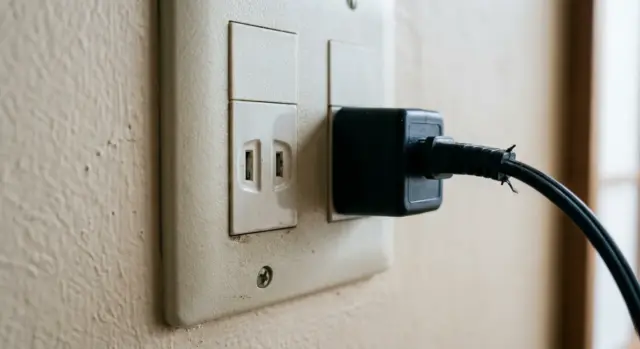
Quick answer: Japan uses Type A plugs (two flat prongs, like North America) at 100 volts. Devices from North America usually work fine at this slightly lower voltage. Devices from a 230-volt region like Europe will need a voltage converter, not just a plug adapter.
Most outlets in Japan are two-pin, with one slot wider than the other. Older buildings and rural areas sometimes still have plain, non-matching outlets. If you're bringing a three-pin appliance, pack an adapter—or just pick one up at an electronics shop once you're there.
Medication
Pack enough prescription medication for your whole trip, along with a copy of your prescription. Japan has strict rules about bringing in certain drugs, including some stimulant medications, products containing codeine, and certain cold or allergy medicines. If you're not sure about a specific medication, check it against the Japanese Ministry of Health's guidance on bringing medicine into Japan before you fly.
For everyday needs like painkillers or cold medicine, Japanese drugstores (doraggu sutoa) carry plenty of options, though the brand names are different. Asking for "Tylenol" or "Advil" by name will usually just get you a confused look. If you know the Japanese word for what you need (kusuri means medicine), or show a translation on your phone, staff can point you to the right shelf.
Small, Wheeled Luggage
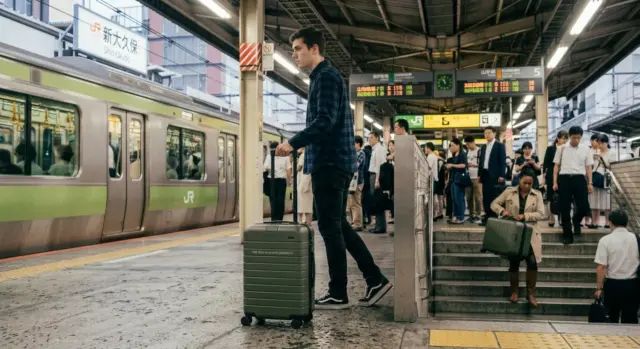
A smaller suitcase or a wheeled backpack works better than one big bag. Storage space on trains, including the Shinkansen (bullet train), is limited, and a large suitcase on a crowded train tends to earn you some unfriendly looks. Many stations also have fewer escalators and elevators than you'd expect, especially outside the biggest cities.
Hand Towel or Handkerchief
Japan's weather can turn quickly, especially in spring, summer, and fall, so a small towel comes in handy for sudden rain or sweat. It's useful day to day too: many public restrooms don't have paper towels or hand dryers, since carrying your own towel is just normal here.
Cash and a Coin Wallet
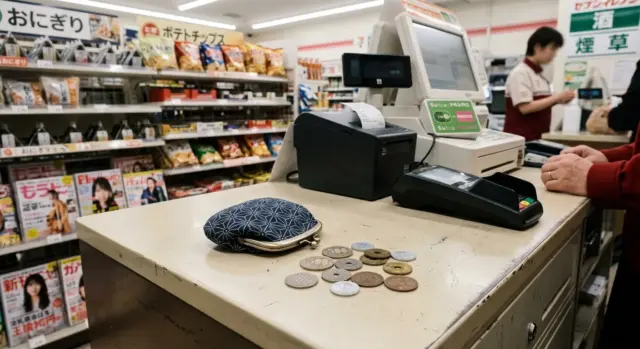
Japan still runs mostly on cash, especially at small shops, shrines, temples, and vending machines. Cards are more common in cities now, but carry cash, along with a wallet with a coin section, will save you a few awkward moments. You'll collect coins faster than you think.
A Compact Umbrella
Japan's weather can change fast, especially in spring and during the rainy season (roughly early June to mid-to-late July). A small, foldable umbrella barely takes up any space, and it beats buying one at a convenience store the second it starts pouring.
A Reusable Bag
Since Japan's 2020 plastic bag law, most stores charge a small fee for plastic bags at checkout. A foldable reusable bag is a small, easy thing to pack, especially since you'll probably end up shopping more than you planned.
A Portable Charger (Power Bank)
Between maps, translation apps, and topping up a transit card on your phone, your battery will drain faster than usual. A portable charger means you're not stuck hunting for an outlet in the middle of your day.
What to Wear in Japan by Season
Japan actually has five seasons to pack for, not four. Along with spring, summer, fall, and winter, there's tsuyu, the rainy season that sits between spring and summer. Here's what to bring when you visit.
Spring (March to May): Spring is one of the most popular times to visit, thanks to cherry blossom season in late March and April. Days can swing from cool to warm, so light layers are your best friend. Pack a mid-weight jacket or cardigan for cool mornings and evenings, a long-sleeve shirt or two, and comfortable walking shoes for all the time you'll spend outside. If you're visiting in April specifically, expect daytime temperatures in the 15-20°C (60-68°F) range, with cooler evenings, so that packable jacket earns its space in your bag.
Tsuyu, the Rainy Season (roughlyJune to mid-July: Tsuyu usually starts in early-to-mid June and runs through early July, though the exact dates shift a bit each year and by region. Expect warm, sticky, humid days with rain that comes and goes throughout the day. Pack lightweight, quick-drying fabrics, a compact umbrella, and maybe a light raincoat if you plan to be outside a lot. The upside? Fewer crowds and better hotel deals than peak spring or fall.
Summer (mid-July to August): Once tsuyu ends, Japanese summer turns hot, humid, and sticky fast, especially in cities like Tokyo and Osaka. Pack lightweight, breathable clothing in cotton or linen, sunglasses, a hat, and high-SPF sunscreen. A portable fan or a cooling towel genuinely helps on the hottest days.
Fall (September to November): Fall brings cooler air and some of Japan's best scenery, as leaves turn red and gold starting in October. Early fall (September) can still feel like summer, so pack a few short-sleeve shirts along with light layers. By November, add a warmer jacket or sweater, since evenings get noticeably colder.
Winter (December to February): Winter ranges from mild in the south to snowy in the north . Pack a warm coat, thermal layers, gloves, and a scarf. If you're heading somewhere snowy, like Hokkaido or the Japanese Alps, waterproof boots are worth the suitcase space.
No matter the season, check the weather forecast for your specific destination about a week before you fly. Japan is a long country, and the weather in Sapporo can look nothing like the weather in Okinawa on the same day.
What NOT to Pack for Japan
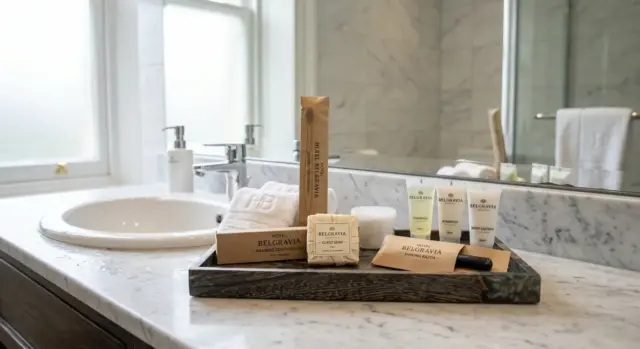
Shampoo and toiletries: Most hotels (3-star and above) give you a toothbrush, toothpaste, soap, and razor. If yours doesn't, convenience stores carry all of this for a few hundred yen.
Seasonal accessories: Skip packing your favorite gloves, scarves, or hats unless you need waterproof gear for hiking. Uniqlo and Daiso sell these cheap, so there's little reason to risk losing something you love on the road.
FAQ
- Q1. Do I need an eSIM or a physical SIM card for Japan?
An eSIM works well if your phone supports it, and you want to skip the airport counter entirely. A physical SIM card is the better pick if your phone is older or doesn't support eSIM. See our eSIM vs SIM card FAQ page for a full comparison.
- Q2. Can you wear shorts in Tokyo?
Yes. Shorts are fine for casual sightseeing in Tokyo, especially in summer. For upscale restaurants or formal settings, smart-casual clothing is a safer choice.
- Q3. What medications are restricted in Japan?
Japan restricts certain stimulant medications, some codeine-based products, and certain cold or allergy medicines. If you're unsure about a specific medication, check official guidance before you travel.
- Q4. What type of power adapter do I need for Japan?
Japan uses Type A plugs at 100 volts. Travelers from North America usually just need a plug adapter, not a voltage converter. Travelers from the 230-volt regions, such as Europe will need a voltage converter too.
- Q5. Does what I pack change by season?
Yes, mainly your clothing. See the season-by-season breakdown above for what to bring each time of the year.
FAQ
Download Your Free Packing List
That's the list! At Sakura Mobile, we've helped travelers get connected in Japan for years, and we know that a little preparation goes a long way. Get your connectivity sorted before you arrive, leave some space in your suitcase for souvenirs, and you'll be ready to enjoy your trip from day one.